![[ts] Typereact](/_next/image?url=%2Fimages%2Fempty.png&w=2048&q=75)
react 타입 분석
react module & tsconfig.json 설정
react type 분석
React.FC/ FunctionComponent
hooks typing
useState
useEffect
❓그러면 lifeCycle이 끝날때 호출되는 이건 뭐임?
다시 타입을 쫒아가보자 ^^
번외)) Destructor 위에 쓰인 unique symbol 이라는건 뭘까
번외)) branding 기법
useCallback
useRef
class components typing
ReactElement 와 ReactNode
react 타입 분석
2023년 9월 12일react module & tsconfig.json 설정
- import 되어있는 module 을 쫒아서 index.d.ts 를 보면 module 의 종류를 알수 있다.
export = React; //common.js v
export default ~  // es module
export as namespace React // UMD
- common.js 모듈은 module 을 불러오는 형식이 다음과 같지만..
import * as React from "react";
import React = require("react");
- tsconfig.json 에서 다음과 같이 설정이 된다면
"esModuleInterop": true
- 다음과 같이 module을 import 해올수 있다.
import React from "react";
📍 또한 react를 import 해오지 않아도 되는데..(근데 기본적으로 typescript는 jsx문법을 인식하지 못한다는것은 생각해놔야함)
- tsconfig.json 에서 다음 처럼 변경해주면 삽가능하다.
"jsx": "react-jsx"
react type 분석
React.FC/ FunctionComponent
- 굳이 return 값에 대한 타입을 지정하지 않아도 다음과 같이 타입추론 가능(어짜피 JSX.Element or null)
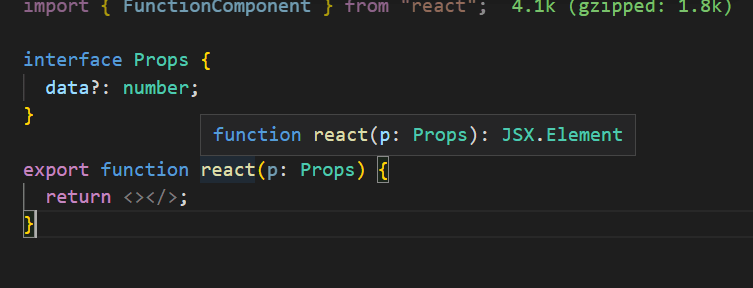
- 다음과 같은 구조를 보며 props가 왜 객체로 받는지에 대한 이해도가 더 명확해진다.
type FC<P = {}> = FunctionComponent<P>;

interface FunctionComponent<P = {}> {
  (props: P, context?: any): ReactElement<any, any> | null;
  propTypes?: WeakValidationMap<P> | undefined;
  contextTypes?: ValidationMap<any> | undefined;
  defaultProps?: Partial<P> | undefined;
  displayName?: string | undefined;
}
-
원래 react18버전 이전까진 children 을 받고 안받고의 여부로 FC/ VFC(VoidFunctionComponent) 가 나뉘어져 있었음 -> 하지만 FC 로 통합됨
❓ 만약 FC에서 children을 받고 싶다면 다음과 같이 children type을 지정하는것을 추천드림
interface Props {
  data?: number;
  children?: ReactNode | undefined;
}
hooks typing
useState
-
인자값으로 직접 변수를 넣는가 콜백 함수를 넣는가(lazy initialization)
🚩lazy initialization 에 대해선 다음글 참조
- lazy initialization 는 복잡한 함수에 대한 초기값에서 리랜더링을 방지하기 위해 사용된다. https://yceffort.kr/2020/10/IIFE-on-use-state-of-react
function useState<S>(initialState: S | (() => S)): [S, Dispatch<SetStateAction<S>>];
useEffect
✔ 번외) 다음과 같은 함수가 있을때 'setS()' 함수는 비동기임
- 비동기인 함수에 await 를 붙여서 동기로 만들수 없다 -> async - await 를 붙일수 있는곳은 return 값이 Promise 인곳만 가능 !!
export const ReactC: FC<Props> = (p: Props) => {
  const [s, setS] = useState("");

  useEffect(() => {
    setS(() => {
      return "asdasd";
    });
  }, []);
  return <div>asdasd</div>;
};
- 또한 useEffect() hook은 type을 살펴보면 return 값이 void로 고정되어있기 때문에 async 자체를 못붙임 ~
function useEffect(effect: EffectCallback, deps?: DependencyList): void;
- 뭐 이런식의 모양은 가능하다고 볼수있다
useEffect(() => {
  const fuc = async () => {
    await axios.post("http://어쩌구");
  };
  fuc();
}, []);
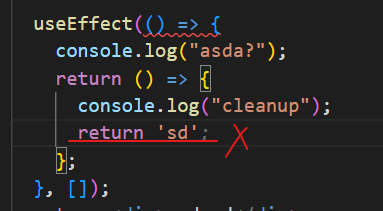
❓그러면 lifeCycle이 끝날때 호출되는 이건 뭐임?
useEffect(() => {
  console.log("asda?");
  return () => {
    console.log("cleanup");
  };
}, []);
다시 타입을 쫒아가보자 ^^
function useEffect(effect: EffectCallback, deps?: DependencyList): void;
- EffectCallback - Destructor type 을 봐보면
type EffectCallback = () => void | Destructor;
type Destructor = () => void | { [UNDEFINED_VOID_ONLY]: never }; // 이게 clean up 함수 typing임
- 그렇기 때문에 cleans up 함수에 return 값 쓰면 에러나쥬?
번외)) Destructor 위에 쓰인 unique symbol 이라는건 뭘까
✔ unique symbol : Symbol() 타이핑하는 방법
declare const UNDEFINED_VOID_ONLY: unique symbol; // ✔
// Destructors are only allowed to return void.
type Destructor = () => void | { [UNDEFINED_VOID_ONLY]: never };
번외)) branding 기법
- ts 에는 branded type 이라는게 있다.
ex ) 예를 들어... 다음과 같은 euro 를 usd 달러 로 단위환산을 해주는 함수가 있다고 하자
const usd = 10;
const eur = 10;
const krw = 2000;
function euroToUsd(euro: number): number {
  return euro * 1.18;
}

console.log(`USD : ${euroToUsd(eur)} `); // 📍 근데 만약 여기에 euroToUsd(krw) 이런식으로 인자값을 잘못 넣어준다면 ??
-
number는 원시 값이기 때문에 값이 잘못 들어갈 경우를 대비한 branded type(가상속성) 이 필요하다.
다음과 같이 지정이 가능하다
type Brand<K, T> = K & { _brand: T }; type EUR = Brand<number, "EUR">; type USD = Brand<number, "USD">; type KRW = Brand<number, "KRW">; const usd = 10 as USD; const eur = 10 as EUR; const krw = 2000 as KRW; function euroToUsd(euro: EUR): number { return euro * 1.18; } console.log(`USD : ${euroToUsd(eur)} `); // euroToUsd 인자 값으로 branded type 'EUR' 만 가능함function useEffect(effect: EffectCallback, deps?: DependencyList): void;- 다음과 같은 인자값 deps의 타입 DependencyList를 쫒아가 보면
type DependencyList = ReadonlyArray<unknown>; //읽기전용 arr- 다음과 같다고 보면됨
const depth: readonly [] = [];
useEffect(() => {
  console.log("asda?");
}, depth); // 원래는 context inference(문맥적 추론) 에 의해서 자연스레 ReadonlyArray<unknown> 라고 추론되는거임
useCallback
- 다음과 같은 useCallback error가 있다
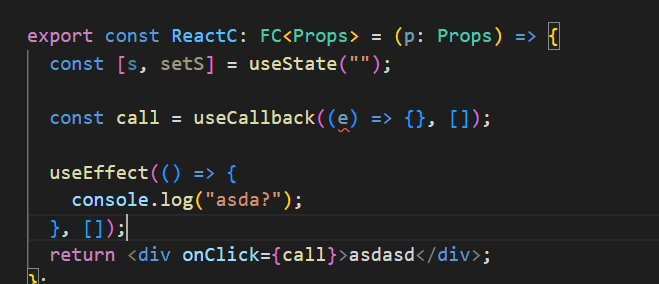
- parameter 타입에 error가 발생한다.. 타입을 까보자
function useCallback<T extends Function>(callback: T, deps: DependencyList): T;
- react 18버전 이전의 타이핑(이때는 any 로 지정되어 있어서 error는 안남)
function useCallback<T extends (...arg: any[]) => any>(callback: T, deps: DependencyList): T;
- 그러면 parameter 를 타이핑 해주어야 함
const call = useCallback((e: MouseEvent<HTMLDivElement>) => {
  // 내장된 MouseEvent 사용시 error 뜸으로 반드시 !! react 에 지정되어있는  MouseEvent module type을 사용하기 => import { FC, MouseEvent, ReactNode, useCallback, useEffect, useState } from "react";

  return <div></div>;
}, []);
useRef
- useRef 의 타입을 보면 3개가 overloading 되어있다.
function useRef<T>(initialValue: T): MutableRefObject<T>; // 1
function useRef<T>(initialValue: T | null): RefObject<T>; // 2
function useRef<T = undefined>(): MutableRefObject<T | undefined>; // 3
- 우리가 흔히 쓰는 element 에 달기위한 ref를 만들기 위해서는 2번 타입과 연결 해줘야한다.
export const ReactC: FC<Props> = (p: Props) => {
  const divRef = useRef<HTMLDivElement>(null); // ✔
  const inputRef = useRef(0);

  const call = useCallback((e: MouseEvent<HTMLDivElement>) => {
    return <div></div>;
  }, []);

  useEffect(() => {
    inputRef.current += 1;
  }, []);
  return (
    <div onClick={call} ref={divRef}>
      <input />
    </div>
  );
};
-
그렇기 위해서는 generic 을 명시해주고 초기값을 null 로 설정해 주어야함
❓ 왜
function useRef<T>(initialValue: T | null): RefObject<T>; interface RefObject<T> { readonly current: T | null; } type RefCallback<T> = { bivarianceHack(instance: T | null): void }["bivarianceHack"]; type Ref<T> = RefCallback<T> | RefObject<T> | null;-
왜냐면 2번타입은'initialValue' 의 타입이 T | null 로 더 좁은 범위(반공변성)로 지정되어있기 때문에 초깃값을 null 로 할지라도 하나의 T 타입을 따라가는 거임
-
만약에 초깃값을 이런식으로 넣어준다면? => 2번 타입으로 표기됨
const divRef = useRef<HTMLDivElement>(document.querySelector("div")); // (alias) useRef<HTMLDivElement>(initialValue: HTMLDivElement | null): React.RefObject<HTMLDivElement> (+2 overloads)- 하지만 '!(NonNullable assertion)'을 걸어주게 되면 => 1번 타입으로 표기됨
const divRef = useRef<HTMLDivElement>(document.querySelector("div")!); // useRef<HTMLDivElement>(initialValue: HTMLDivElement): React.MutableRefObject<HTMLDivElement> (+2 overloads) -
-
1번 타입은 리랜더링을 방지하기 위한 state 로 만들때 사용
class components typing
- 다음과 같은 구조가 있음
import { Component, FormEvent } from "react";

interface P {
  name: string;
  title: string;
}
interface S {
  word: string;
  value: string;
}
class RC extends Component<P, S> {
  state = {
    name: "yelim",
    value: "",
    result: "",
    word: "",
  };

  onSubmitForm = (e: FormEvent) => {
    e.preventDefault();
    this.setState({ value: "" });
  };
}
- extends 된 Component 타입을 따라가보자
interface Component<P = {}, S = {}, SS = any> extends ComponentLifecycle<P, S, SS> {}
class Component<P, S> {
  static contextType?: Context<any> | undefined;

  constructor(props: P, context: any);
  setState<K extends keyof S>(
    state: ((prevState: Readonly<S>, props: Readonly<P>) => Pick<S, K> | S | null) | (Pick<S, K> | S | null),
    callback?: () => void
  ): void;

  forceUpdate(callback?: () => void): void;
  render(): ReactNode;

  readonly props: Readonly<P>;
  state: Readonly<S>;

  refs: {
    [key: string]: ReactInstance;
  };
}
- 다음 부분이 가능하게 된 이유를 살펴보자
onSubmitForm = (e: FormEvent) => {
  e.preventDefault();
  this.setState({ value: "" }); // state 의 프로퍼티가 필수적으로 들어가지 않아도 error 가 나질않음
};
❓ 왜 그럴까
- 'Pick<S, K> | S | null' 이부분에서의 지정된 타입때문에
setState<K extends keyof S>(
state: ((prevState: Readonly<S>, props: Readonly<P>) => Pick<S, K> | S | null) | (Pick<S, K> | S | null),
callback?: () => void

): void;
ReactElement 와 ReactNode
- 다음과 같이 class render의 return type은 ReactNode 이지만 FunctionComponent 의 return type은 ReactElement이다
// -----class--------------------
 render(): ReactNode;

// -----FunctionComponent---------
 (props: P, context?: any): ReactElement<any, any> | null;
- ReactNode 타입을 따라가 보면 ReactNode 는 ReactElement 를 포괄한다.(더욱 다양한 type의 return 값을 가질수 있다.)
type ReactNode =
  | ReactElement
  | string
  | number
  | Iterable<ReactNode>
  | ReactPortal
  | boolean
  | null
  | undefined
  | DO_NOT_USE_OR_YOU_WILL_BE_FIRED_EXPERIMENTAL_REACT_NODES[keyof DO_NOT_USE_OR_YOU_WILL_BE_FIRED_EXPERIMENTAL_REACT_NODES];
- 그렇기 때문에 다음과 같은 구조도 가능
import { Component, FormEvent } from "react";

interface P {
  name: string;
  title: string;
}
interface S {
  word: string;
  value: string;
}

class RC extends Component<P, S> {
  state = {
    name: "yelim",
    value: "",
    result: "",
    word: "",
  };

  onSubmitForm = (e: FormEvent) => {
    e.preventDefault();
    this.setState({ value: "" });
  };

  render() {
    return "hello";
  }
}

export const A = () => {
  return <RC name="myname" title="test" />;
};